

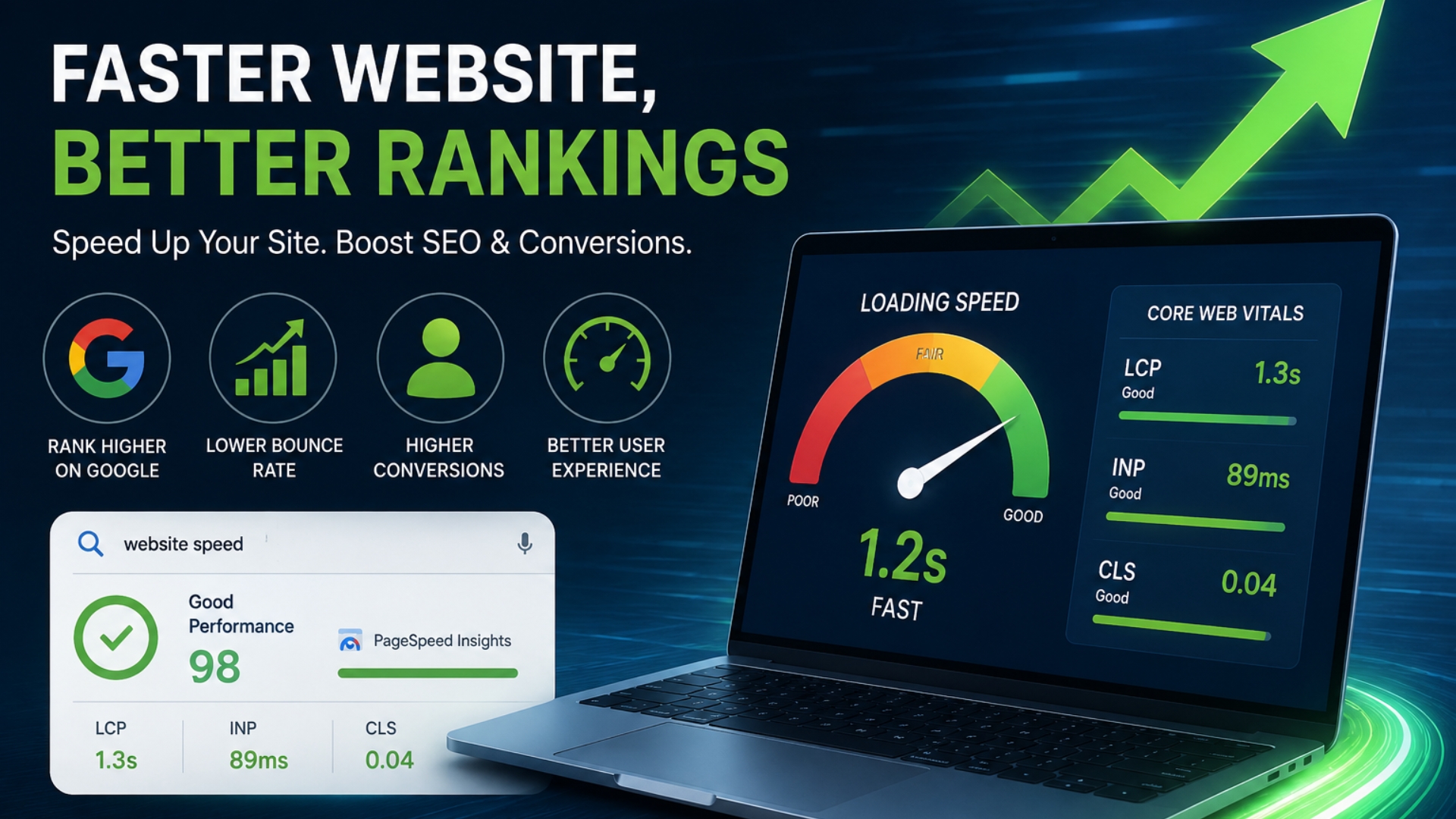
Page speed has been a Google ranking factor since 2010, and its weight keeps growing. Website speed now shapes SEO through two channels: page experience signals and user behaviour. Slow sites lose rankings to faster competitors and bleed conversions. HubSpot data shows conversions drop 4.42% for every extra second of load time. Google’s March 2026 core update raised Core Web Vitals weighting even higher. Yet fewer than half of mobile sites pass all three thresholds. Speed also affects AI search visibility now. This guide explains why speed matters for SEO and shows practical fixes.
Key Takeaways
- Page speed influences both Google rankings and user conversions directly.
- Core Web Vitals act as a tiebreaker in competitive search results.
- Only 42% of mobile sites pass all three Core Web Vitals.
- Image, JavaScript, and hosting fixes deliver the fastest speed gains.
7 Reasons Website Speed Matters for SEO and How to Improve It
1. Speed Is a Confirmed Google Ranking Signal
Google treats speed as part of its page experience ranking signal. It has been confirmed that page speed affects both desktop and mobile search. Slow pages receive lower rankings and fewer organic visitors. The March 2026 core update increased Core Web Vitals weighting further. That said, speed acts as a multiplier on existing content quality. Fix it by running PageSpeed Insights first. A score of 90 or above signals a healthy technical foundation.
2. Core Web Vitals Set the Thresholds
Core Web Vitals codify speed into three measurable metrics. Largest Contentful Paint should stay under 2.5 seconds. Interaction to Next Paint should fall under 200 milliseconds. Cumulative Layout Shift should remain below 0.1. Google passes a page when 75% of real user sessions meet these. In practice, monitor these in Search Console regularly. Use the Chrome UX Report data, since field metrics drive rankings, not lab tests.
3. Slow Speed Raises Bounce Rate
Bounce rate climbs sharply as pages slow down. Roughly 53% of mobile users leave sites loading past three seconds. Google reads bounce and dwell time as quality signals. High bounce rates push rankings down indirectly. For example, bounce probability rises 32% when load time goes from one to three seconds. Reduce it by trimming above-the-fold content. Faster first paint keeps visitors engaged and signals relevance to Google.
4. Speed Directly Affects Conversions
Speed shapes revenue as much as rankings. Conversions drop 7% for each second of delay. On mobile, that loss can reach 20% per second. Faster pages capture more leads and sales consistently. Worth noting: a 0.1-second mobile improvement can lift conversions 8.4%. Prioritise mobile speed, since mobile drives over 60% of traffic. Performance gains often beat paid acquisition for return on investment.
5. Heavy Images Slow Your Site
Uncompressed images are the most common speed killer. They inflate Largest Contentful Paint and delay full load. Switching to WebP format cuts time-to-interaction 15% to 45%. Lazy loading defers off-screen images until needed. As a result, your core content renders faster. Compress every image before upload and serve responsive sizes. This single fix often recovers one to four seconds of load time instantly.
6. Excess JavaScript and Plugins Add Weight
Bloated code stacks up requests and slows rendering. Each extra third-party script can add around 34 milliseconds of delay. Plugins load unused CSS and competing frameworks together. Removing unnecessary plugins cuts load time by one to four seconds. Here is the key: audit your scripts and defer non-critical ones. Minify CSS and JavaScript files to shrink the payload. Clean code beats patching speed problems with more tools.
7. Hosting and CDN Choice Sets Your Ceiling
Underpowered hosting caps how fast a site can ever load. Server response time, or TTFB, should stay under 200 milliseconds per Google. Cheap shared hosting often misses that target. A content delivery network distributes assets closer to users. Using Cloudflare often cuts global latency 30% to 60%. Upgrade to quality managed hosting and pair it with a CDN. This foundation supports every other speed optimisation you make.
The Bottom Line
Website speed matters for SEO because Google measures it directly and indirectly. Core Web Vitals act as a ranking tiebreaker, while slow load times raise bounce rates and erode conversions. The fixes are practical: compress images, trim JavaScript, remove excess plugins, and upgrade hosting with a CDN. Speed now affects AI search visibility too, so the stakes keep rising. A faster site earns better rankings, higher conversions, and stronger user trust. TheLikharis helps businesses diagnose and fix the bottlenecks holding their rankings back. Explore our technical SEO and web design services for a tailored speed audit. Test your site in PageSpeed Insights, then fix the biggest bottleneck first.

Frequently Asked Questions
Does website speed really affect SEO rankings?
Yes. Google confirmed page speed as a ranking factor for desktop and mobile. It works through page experience signals and user behaviour. Speed acts as a tiebreaker when content quality is comparable.
What are good Core Web Vitals scores?
Largest Contentful Paint should be under 2.5 seconds, Interaction to Next Paint under 200 milliseconds, and Cumulative Layout Shift below 0.1. Google passes a page when 75% of real user sessions meet these thresholds.
How fast should my website load?
Aim for under two seconds. Roughly 53% of mobile users abandon sites loading past three seconds. Server response time should stay under 200 milliseconds, since faster load times improve both rankings and conversions.
What is the fastest way to improve website speed?
Start with image compression and the WebP format, which can recover one to four seconds. Then remove unused plugins, minify code, and add a CDN. Run PageSpeed Insights to find your biggest bottleneck.
How long until speed improvements affect rankings?
Google uses a 28-day rolling window of real-user field data from the Chrome UX Report. Improvements typically appear in Search Console within four to six weeks of going live.
Does page speed affect AI search visibility?
Yes. Faster sites are easier for AI crawlers to access and process. Pages with poor performance rarely appear in AI Overviews, so speed now influences both organic and AI-cited traffic.