

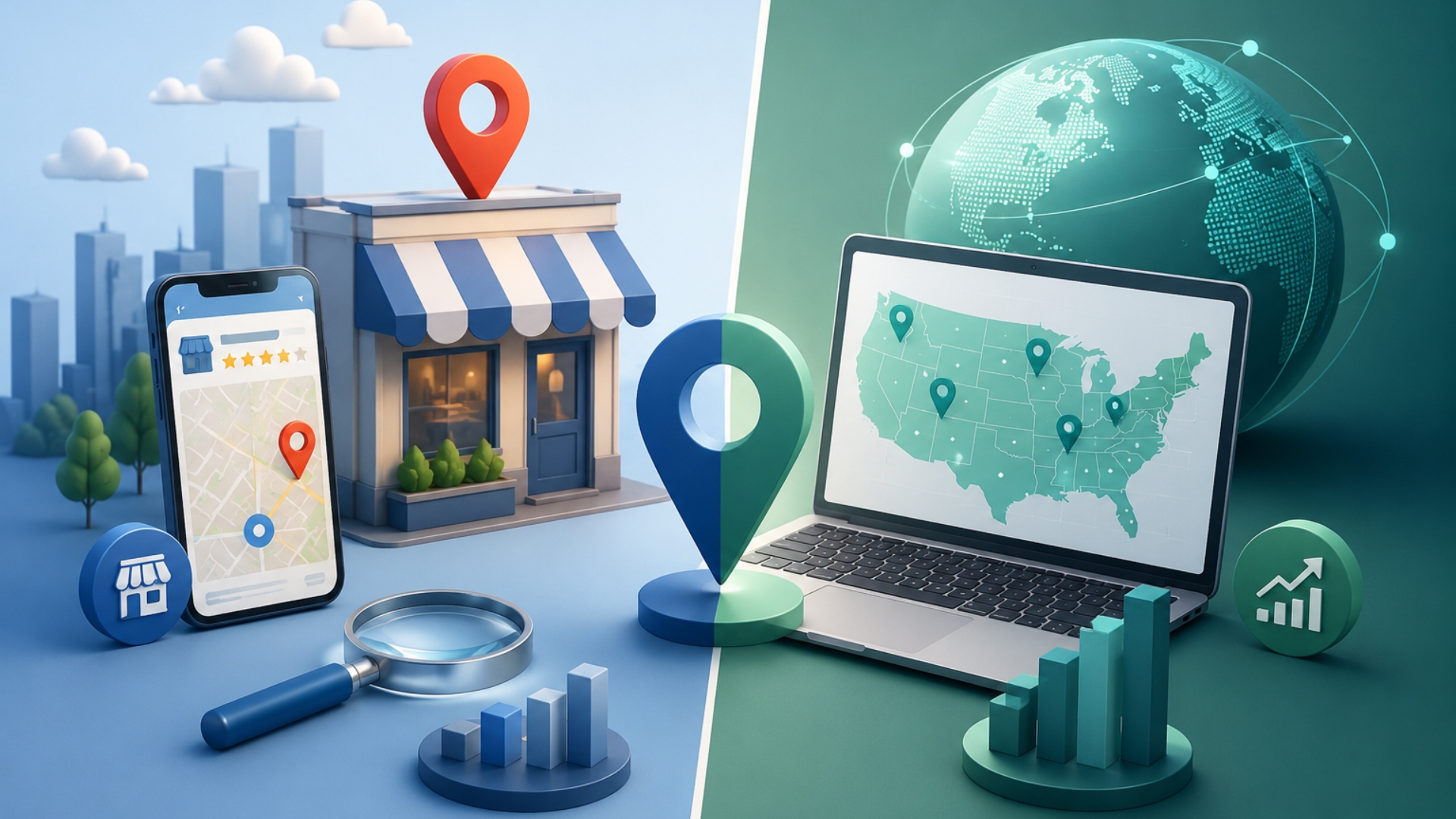
Roughly 46% of Google searches carry local intent. Yet most brands still chase the wrong audience. Choosing between Local SEO vs. National SEO shapes your traffic quality. It also affects conversion rates and ROI. The two strategies share core ranking principles such as content quality. However, they differ in keyword targeting, link building, SERP features, and measurement frameworks. Picking the wrong path wastes budget on unqualified clicks. Picking the right one compounds organic visibility across the entire conversion funnel. This guide breaks down both strategies side by side. It also covers the signals, tactics, and KPIs that drive each decision.
Key Takeaways
- Local SEO targets nearby buyers via Google Business Profile, citations, and geo-modified keywords.
- National SEO targets country-wide audiences using broad keywords and high-authority backlinks.
- Hybrid strategies work best for multi-location brands and e-commerce companies with stores.
- Choose your SEO strategy based on customer location, not company size.
7 Key Differences Between Local SEO vs. National SEO Strategies
1. Geographic Targeting and Keyword Intent
Local SEO targets geo-modified queries like “plumber in Houston” or “near me” searches. National SEO chases broad, high-volume terms without geographic anchors. Roughly 80% of US consumers search for local businesses weekly. The intent gap matters. Local searchers want fast solutions nearby. National searchers compare options across markets. Map your keyword research to user intent first. This step decides every downstream tactic in your campaign.
2. Google Business Profile and Map Pack Visibility
Google Business Profile is the engine of local visibility. Top 3 map pack businesses earn 126% more traffic than ranks 4 to 10. The 3-pack captures most local conversions. National SEO leans less on GBP and more on organic SERPs. Optimize your profile with primary categories, photos, and review velocity. National brands still maintain GBP for branded searches. However, organic ranking matters most.
3. Backlink Strategy and Citation Building
Local SEO prioritizes citations on directories like Yelp, BBB, and chambers of commerce. National SEO focuses on high-authority backlinks from industry publications. Citation consistency boosts NAP trust signals for local algorithms. National campaigns chase domain rating gains via digital PR. The SEO market is projected to hit $106 billion by 2030. Mix both tactics for hybrid brands. Track referring domain quality, not just volume.
4. Content Strategy and Topical Authority
Local content covers neighborhood guides, city-specific service pages, and community events. National content builds topical clusters around evergreen industry themes. Each format targets different stages of the conversion funnel. Customers are 2.7x more likely to trust businesses with complete Google profiles. Local pages need schema markup like LocalBusiness. National pages need FAQ and Article schema. Publish consistently to build E-E-A-T signals. Quality always beats publishing volume here.
5. SERP Competition and Ranking Difficulty
The Local SEO vs. National SEO competition gap is real. Local rivals fight inside a defined geographic radius. National SEO competes against thousands of authoritative domains. Industry data shows 1.5 billion “near me” searches happen every month. National keywords carry higher difficulty scores in tools like Ahrefs and Semrush. As a result, ranking timelines stretch from 6 to 12 months. Local campaigns often show wins within 90 days.
6. Conversion Tracking and KPI Frameworks
Local SEO tracks calls, direction requests, and store visits via GBP insights. National SEO measures organic sessions, assisted conversions, and revenue per channel. 78% of local mobile searches result in offline purchases within 24 hours. Set up call tracking, UTM parameters, and goal events in GA4. Different funnel stages demand different KPIs. Vanity metrics like impressions mislead local brands. Tie every report to revenue impact instead.
7. Budget Allocation and Time to Results
Local SEO often delivers ROI within 3 to 6 months for service-area businesses. National SEO requires 6 to 12 months of compounded effort. Research shows 32% of consumers search for local businesses online every single day. Budgets typically scale with competition, not geography. Allocate 70% to local for service businesses with physical locations. Shift the ratio for e-commerce or SaaS brands. Reassess KPI performance every quarter without fail.
The Bottom Line
The Local SEO vs. National SEO debate is not about picking sides. It is about matching the strategy to your business model. Local SEO wins for service-area brands chasing high-intent nearby buyers. National SEO wins for e-commerce, SaaS, and content-driven companies. Hybrid models work best for multi-location enterprises. The right framework saves wasted budget and accelerates ROI. At TheLikharis, our team builds custom SEO roadmaps for both strategies. From keyword research to technical audits, we cover every layer. See our digital marketing and SEO services to learn how we drive measurable results. Audit your current SEO mix this week and align it with revenue goals.

Frequently Asked Questions
What is the main difference between Local SEO and National SEO?
Local SEO targets customers in a specific city or region. It uses geo-modified keywords and Google Business Profile. National SEO targets a country-wide audience with broad keywords. It relies on high-authority backlinks for ranking.
Which is better for small businesses, Local SEO or National SEO?
Local SEO is better for small businesses with physical locations or service areas. It delivers higher conversion rates and faster ROI. National SEO suits ecommerce or SaaS brands. Pick based on customer location, not company size.
How long does Local SEO take to show results?
Local SEO typically delivers results within 3 to 6 months for service businesses. Google Business Profile optimization shows wins faster. Competitive markets may need 9 months or more. Consistent reviews, citations, and content speed up timelines.
Can a business use both Local SEO and National SEO?
Yes. Hybrid SEO works for multi-location brands, franchises, and e-commerce stores. Build local landing pages for each market while ranking for national keywords. Allocate budget based on revenue split between local and online channels.
What is the cost difference between Local SEO and National SEO?
Local SEO campaigns typically cost less due to narrower competition and fewer keywords. National SEO requires bigger budgets for content production, link building, and technical audits. Industry data suggests national budgets often run two to five times higher than local.
Does Google Business Profile matter for National SEO?
Google Business Profile matters less for purely national or online-only businesses. However, brands with offices or branches still benefit from branded GBP listings. It supports trust signals, branded search visibility, and basic local discovery for headquarters.